What "Actionable Gamification" Is Teaching Me About Product Design
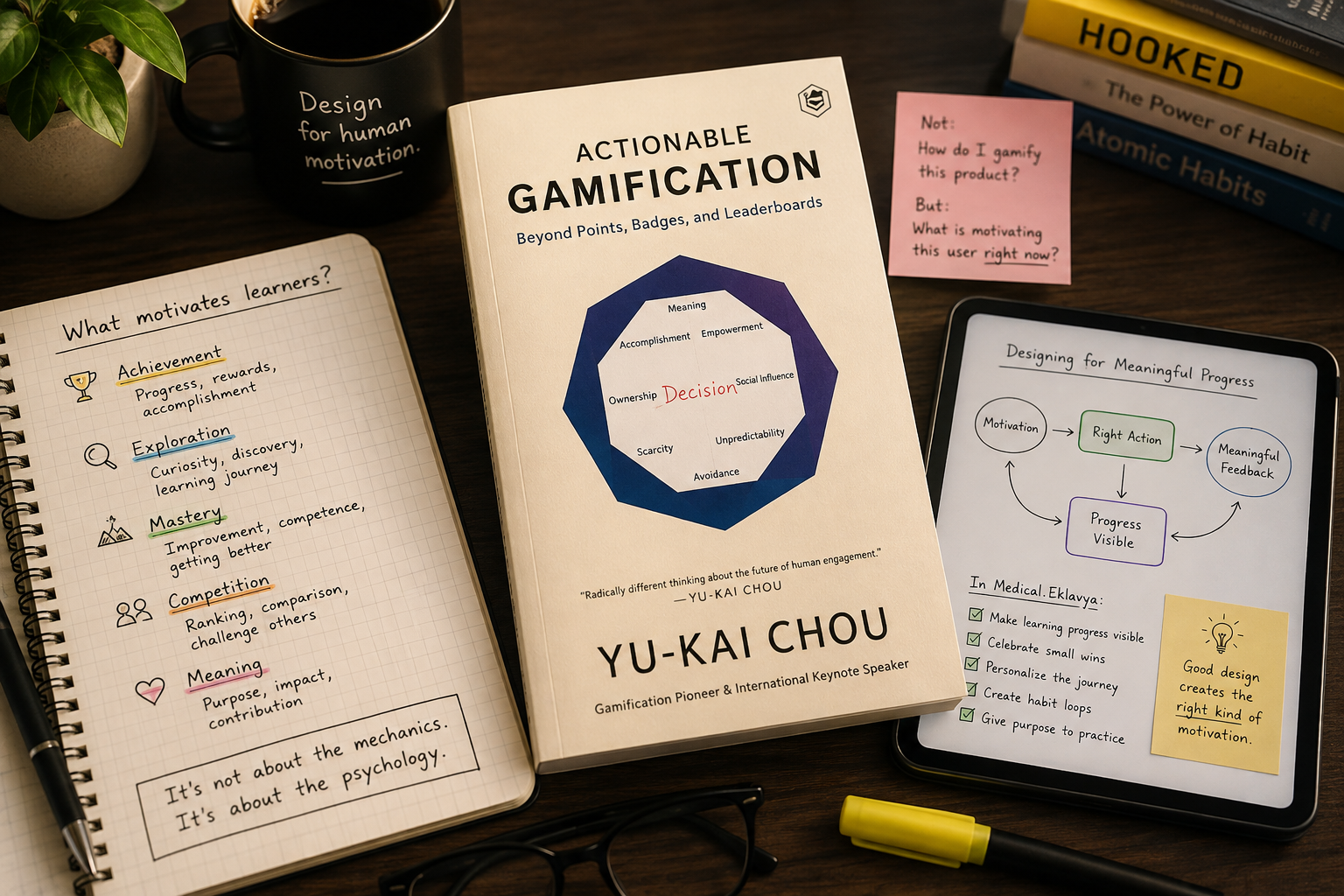
I've been reading Actionable Gamification, and I'm slowly realizing that gamification isn't really about adding points, badges, or leaderboards.
It's about understanding why people act.
That idea is already changing how I think about designing products.
While working on Medical.Eklavya, I started looking at learning differently.
A student doesn't always need another feature.
Sometimes they need a reason to come back.
Sometimes they need progress they can see.
Sometimes they need a small challenge.
Sometimes they need to feel that their effort actually matters.
The book talks about different motivational drivers, and one idea that really stayed with me is that people are motivated by very different things.
Some want achievement.
Some want exploration.
Some want mastery.
Some want competition.
Some want meaning.
So instead of asking:
"How do I gamify this product?"
I'm learning to ask:
"What is motivating this user right now?"
That changes the design completely.
For a learning product, a streak isn't the goal.
The goal is creating a feeling of progress.
A badge isn't the goal.
The goal is recognition of achievement.
A daily task isn't the goal.
The goal is helping someone build a habit of learning.
And this is probably my biggest takeaway so far:
Good product design isn't about making users do more. It's about making the right action feel meaningful.
I'm still reading, experimenting, and figuring out how much of this actually belongs in Medical.Eklavya.
But it's already changing the questions I ask when I design.
Not: "What feature should we add?"
But: "What human motivation are we designing for?"